
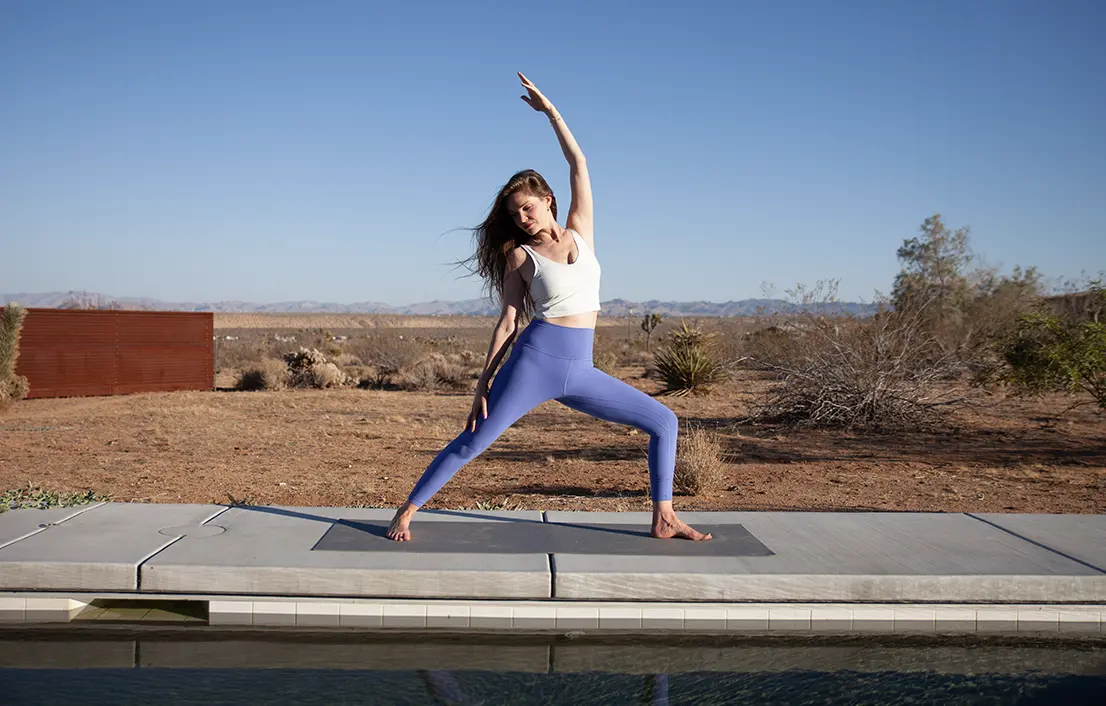
Ariel Kiley on Embodied Fitness and Living Fully
Meet this month’s Teacher Spotlight: Ariel Kiley, a longtime and beloved member of the Tune Up Fitness community. From her early days as a writer and actress in New York City, to building a thriving teaching career, to buying a camper trailer and driving herself to the California desert to heal, Ariel has followed the signals of her body with a boldness most of us only dream of.
Today she runs FitBodLife, an online embodied fitness platform rooted in the belief that fitness should serve your actual life: the hiking, the dancing, the carrying of heavy melons, all of it. Her deep fascination with the human body has made her a passionate guide and advocate, and her story is as alive and full as the life she helps others step into.
From Yoga Teacher to Embodied Fitness Practitioner
Erin: Can you tell us a little bit about yourself?
Ariel: My background was originally on the creative side: I was a writer and actress. I think of myself as an artist and devotee of spiritual teachings, so it was a huge surprise when I realized how fascinating the body, anatomy, and the nervous system are.
For the past 15 years, my journey has largely been about exploring the body and what’s possible through embodiment. I was a Tune Up Fitness teacher and teacher trainer for several years. I’m a certified Yoga Therapist and Somatic Experiencing trauma resolution practitioner.
I started as someone who loved yoga philosophy and that transitioned into yoga asana and the physical practices connected to it. Once I experienced how yoga asana impacted my consciousness I was obsessed. Soon after I started teaching my classes became successful, but I realized there was just so much I didn’t know. People were coming with herniated discs, different injuries and ailments, and I really wasn’t educated enough to truly serve them. That’s when I found Tune Up Fitness and Jill Miller’s work.
Erin: You’ve been a teacher, a teacher trainer, and now you have your own platform. Can you share the motivation behind all these shifts?
Ariel: There have been a few significant things that propelled me in different directions. Soon after I started going through Tune Up Fitness trainings, in 2011, I was in a serious car accident on the LA freeway. I walked away with no soft tissue damage and no whiplash, which I attribute largely to my practices. But I developed PTSD and could not get into a car without panic attacks. That’s when my investment in this work shifted from a nice-to-have to a need-to-have. It’s also when I got deeply introduced to Somatic Experiencing (SE) trauma resolution to overcome PTSD. I learned something profound about how we can listen to the body, tap into unfinished survival responses from traumatic events, complete them, and move on. That fascinated me.
After the accident, I went back to New York, driven by both the need to make money and the hunger to keep growing and expanding. I created a very big career. I co-published a book about brilliant flirtation. I was hitting the NY nightlife; I would be out until 2am, wake up at 4AM to get from Brooklyn to the Upper West Side to teach a 6AM class. I was also co-creating teaching trainings and traveled extensively for Equinox Fitness Clubs. It was pretty rock n’roll for awhile. But towards my mid-30s, my close friend Simone, who I co-wrote the book with, was diagnosed with cancer. Over the course of two years, I watched her body break down and die.
By then I was also taking my own psychological healing more seriously, doing deeper somatic work with a therapist. I started to see that my nervous system had been conditioned for high-intensity living. I craved intense experiences to feel alive. In some ways, through yoga philosophy, I think I was spiritually bypassing, avoiding going through some uncomfortable stuff in myself that arose when I slowed down.
Eventually the burnout became undeniable. I’d get in front of classes, hold a blanket in front of my face to demonstrate how to fold it, and feel a wave of relief because I was hidden. I stopped offering hands-on adjustments. I got to a point where I didn’t have anything left to give. I had the strangest urge to leave the city, go to the desert, and lie on the boulders in the sun to heal. So I bought a camper trailer in 2019 and drove to the west coast. I intuitively arrived in Joshua Tree and completely shut down my teaching. I needed to stop having to emote, and stop processing other people’s needs. I just wanted to heal.
Then several months later the pandemic came, and I felt called to teach somatic tools to help people cope and get my life coaching certificate. Eventually I created a successful online embodiment program that grew into what is now FitBodLife, and I haven’t looked back.
Erin: Throughout your different teaching eras, what kept you going, what pushed you away, what called you back?
Ariel: We all go through phases of being extroverted and outgoing, and phases of needing to withdraw and pull in. I don’t think any of these phases are wrong. It’s just breathing, over and over again. You breathe in, you inspire, you’re full. You breathe out, you empty. You begin anew, I can track the expansion and retraction of my life in terms of months and years, and that natural need to pull back in before going back out again.
My New York phase was absolutely magnificent. I learned so fast. I was following Jill everywhere because I wanted to learn from her. I was in a Miami hotel at the ECA Fitness conference and she had me run out to buy markers during lunch, then drew all over my body so the students could better understand their “EmBodimaps;” it was so fun. My mind was blown open, and to this day I don’t think I can adequately explain how Jill’s guidance has impacted me – it’s so profound. And at some point I reached completion in that phase. I got what I needed from it. Then comes a stage of letting it rest, letting it distill into what’s relevant to me going forward. I had to consider the possibility of letting it go entirely, for it to reconstitute itself in a new way that is mine.
I also went through a deeply humbling fertility journey that did not result in getting pregnant. This completely changed how I relate to my body, and made me need to rethink where my value lies as a cisgender hetero woman in this world. Just like with the car accident, I didn’t ask for that, but it informed my path forward.
And then there’s my inner boss bitch who shows up and says: you’ve got the skills, stop being an employee, it’s time to create your own thing – let’s f’in go! I’m not here to make a very small amount of money for a very high-level skill set. At this point in my life, I want my own lucrative business that really works for my lifestyle and my energy levels. Being my own boss, creating my own program born of my unique perspective and experiences, is also part of my evolution.
Erin: What keeps you curious and motivated these days?
Ariel: I’ve started taking a modern dance class and it is a completely new vocabulary for my body. I can sequence a yoga flow without thinking, but novel dance choreography makes me feel like a beginner, and that feeling, my nerves getting myelinated as I slow it down and try again (and again and again!), is so refreshing. Sucking at it is so exciting . . . because I get to experience, in real time, that feeling of embodiment discovering itself in a new form. There’s a great book, The Talent Code by Daniel Coyle, that explains myelination beautifully and what it really means to learn a new skill. Being a beginner again is a gift.
The tagline of FitBodLife is “embodied fitness for your full and fabulous life.” The classes are about living a really full life and getting to have the best adventures with your body while you’re here. Hiking in deep wilderness, dancing into your old age, enjoying your body across decades. And this might be controversial in some fitness circles, but I still love to wear my really high heels! I’ve conditioned my feet so I can dance for hours in a cute outfit. Think of all the things you want to do between now and when you die. How can your fitness practice serve that?
I have one student, Debbie, who takes care of feral cats in her backyard. In January, with the ground frozen, she’s out there with heavy bags of food, caring for these animals that mean everything to her. When I think of Debby, I think: how can my program condition her body so she can keep doing this for as long as she wants? I have another client that was elated to be able to carry heavy melons in her hands as opposed to putting them in her cart as she shops, then another who spends the summer in Colorado doing deep wilderness hikes alone. Their real lives are what inspire me to keep generating new practices.
Tools for Embodied Fitness: Presence, Breath, and Nervous System Regulation
Erin: What are your most reliable tools for helping people?
Ariel: First, nervous system regulation 101. The simplest stuff: feel your feet on the floor, feel your body in the seat, feel that you’re here and now in this moment. YOU ARE REAL. These practices are the foundation of Somatic Experiencing. Translated from the physical into a more spiritual place, it becomes presence. Simple, profound presence through embodiment. Second, breath awareness. You don’t even have to change your breath. Just notice it, and you will inhabit yourself more fully. It activates your interoception, your ability to sense what’s happening within. This brings coherence. Then you are with yourself as you move forward.
Third, attuning to your genuine values. The inquiring into what’s truly important right now. Getting real with yourself. When we’re busy, our minds rush and our priorities get scrambled. I have a codependent tendency, and so do many of the people I work with. We orient toward pleasing others, sometimes projecting onto them what we think they want from us. Coming back to your own true values and needs is where real clarity lives.
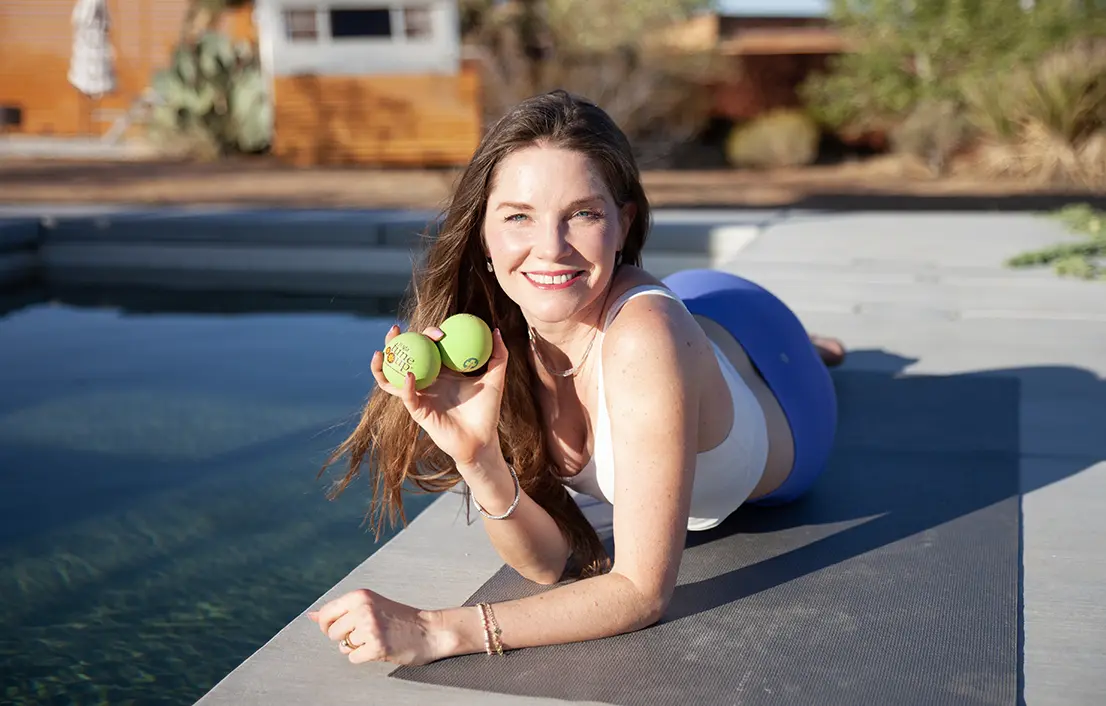
And then everything else: self-massage on therapy balls to work out tension patterns, whether you know you have them or not, smart strengthening, and this concept of mobility where flexibility, strength, and neuromuscular control come together. When people feel fundamentally regulated and physically empowered, they think better. They’re more compassionate. Collectively, I believe it makes us more collaborative. I think if everyone could just get that together, our world would be a better place. Which is partly why I started a YouTube channel. Self-massage just makes people kinder!
How Long Embodied Fitness Takes to Work
Erin: What are the most common challenges you see, and how long does it take to create a real shift?
Ariel: Usually some combination of progressive physical limitation and fear. They’re reaching an age and stage where certain things are catching up: a knee that’s starting to worry them, low back pain that limits what they can do with their kids, and alongside that, a deep longing to live fully. They want to turn it around before it gets worse. They want to create what Jill would call a new normal in their body.
I often see a mental shift before any dramatic physical change. There’s a light people get in their eyes when they start to feel more embodied, more empowered, more awake and alive from within. I see that light within a month of someone regularly practicing. Physical changes that others notice tend to follow in three to six months: a friend commenting on how strong their arms feel, clothes fitting differently, having the energy for a bike ride they wouldn’t have attempted before. My own students have shared their own success stories; a member who can suddenly match her husband in golf or another who was able to snow shovel an elderly neighbor’s driveway and the pride felt it was accomplished without pain.
Why Embodied Fitness Belongs in Everyday Life
Erin: Where would you like to see humanity continue evolving?
Ariel: I believe so much of the insight we need to heal, to stop being unconsciously driven by things that have happened to us, is in our tissues. Freedom can be found there, by tending to the body the way you would tend a garden. You have the gift of inhabiting this body for a brief time, if you’re lucky, and take care of it, maybe a hundred years or more.
When you tend your body really well, it impacts everything: every relationship, every choice, every interaction. My hope is that more people get access to tools that help them compassionately care for their physiological selves, and that we get better educated on how to do that. Kids should learn this in school. Because when we don’t feel safe in our bodies, we relate to the world from a place of fear, and we create a completely different world than when we feel fundamentally present and safe. I think that’s foundational knowledge.
Erin: Where would you like to see your own personal work go deeper?
Ariel: I think in a lot of ways, I’m intimidated by people in the conscious fitness space because I don’t think of myself as having a very academic brain. And yet I am endlessly curious and excited by all these things you can learn about. So I think what I really want going forward is to just keep being a student of my own body and my own physiology, and be a student of my students bodies and physiologies, and just keep learning and growing all of us together and like, playing and experimenting.
And if I can do that and feel fantastic in my body and at the same time make a good enough living to, you know, be a good partner in my marriage and feel secure in retirement, that’s more than enough.
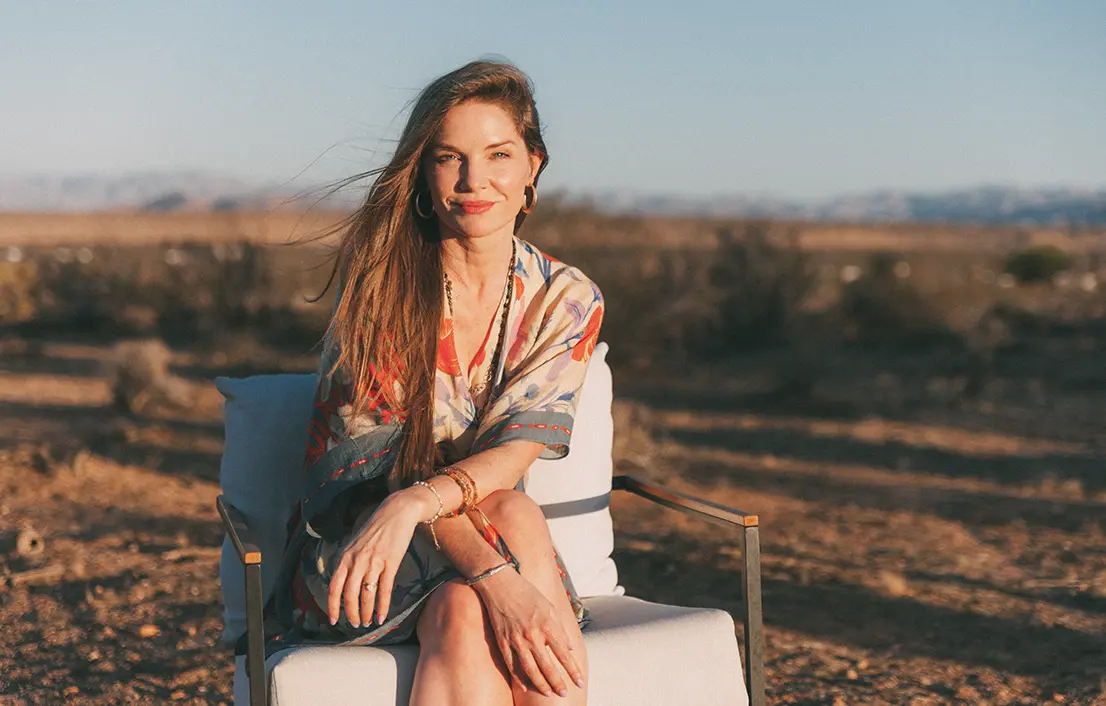
Ariel Kiley is the founder of FitBodLife, an embodied fitness and somatic movement platform · fitbodlife.com
Learn More about Embodiment: 
![New to Self Massage? Start here! Self Myofascial Release Techniques Using Massage Balls [button]](https://www.tuneupfitness.com/wp-content/uploads/2023/07/SelfMyofascial_Blog_Journey_Button.png)

I love Ariel’s story, her energy, and hearing about her path. I appreciate you mentioning your fertility journey as a part of your story. It resonates for me, personally, and reminds me how this work provides support and connection for the whole person, including aspects of our stories that are not directly related to physical/myofascial health. I also love that Ariel manages to train her feet to keep wearing high heels for dancing with pride!!! It can be done.
this is resonates with me so much! and I can’t wait to check out your YouTube channel
Wow… thank you for sharing with such honesty about your journey. We tend to take our bodies and health for granted until that shifts. ‘Freedom can be found there, by tending to the body’- that sentence really made me reflect because the reverse is also true. Again, thank you for sharing your story!
Thank you so much for sharing your story, Ariel. I can relate in so many ways to your story and have had a very similar journey to where I am today. I really appreciated the tools you shared on helping others. Awareness and clarity on what’s important right now has been a top one for me, as well as self-massage, but putting the three together is a great blend to ground, center and come back to the self. Keeping these trio in mind!
To: Aerial, There are so many parts to your story that I can truly relate to, but I will summarize them to the best of my ability. As an aging man of 59 with a paramedic career spanning over 33 years, I have seen my share of injuries, burnout and PTSD. I get it when you say your investment in this work shifted from nice to have to need to have. I can really relate to you buying a camper trailer and driving yourself to the California dessert to heal. I really believe it to be true that fitness should serve your actual life. For me it is my daily medication. I really appreciate you sharing that your life was rock n” roll for awhile and that at one point you started taking your psychological healing more seriously. I think the part of your article that really made me think was when you were teaching yoga and realized there was so much you did not know and that is when you found Tune up Fitness. That is why I chose this course because there is so much I just do not know and want to learn. My learning at first will be for self care and maybe later I might teach again. I cant leave without telling you that is is absolutely so amazingly cool that you have conditioned your feet so you dance for hours in high heels which you love doing. Thank you for sharing your story.
I’m a yoga therapist and TRE provider. The YTU balls are are great tool to help clients safely begin to reconnect to their bodies – especially when, because of experienced trauma, their body has become a place that no longer feels safe.