
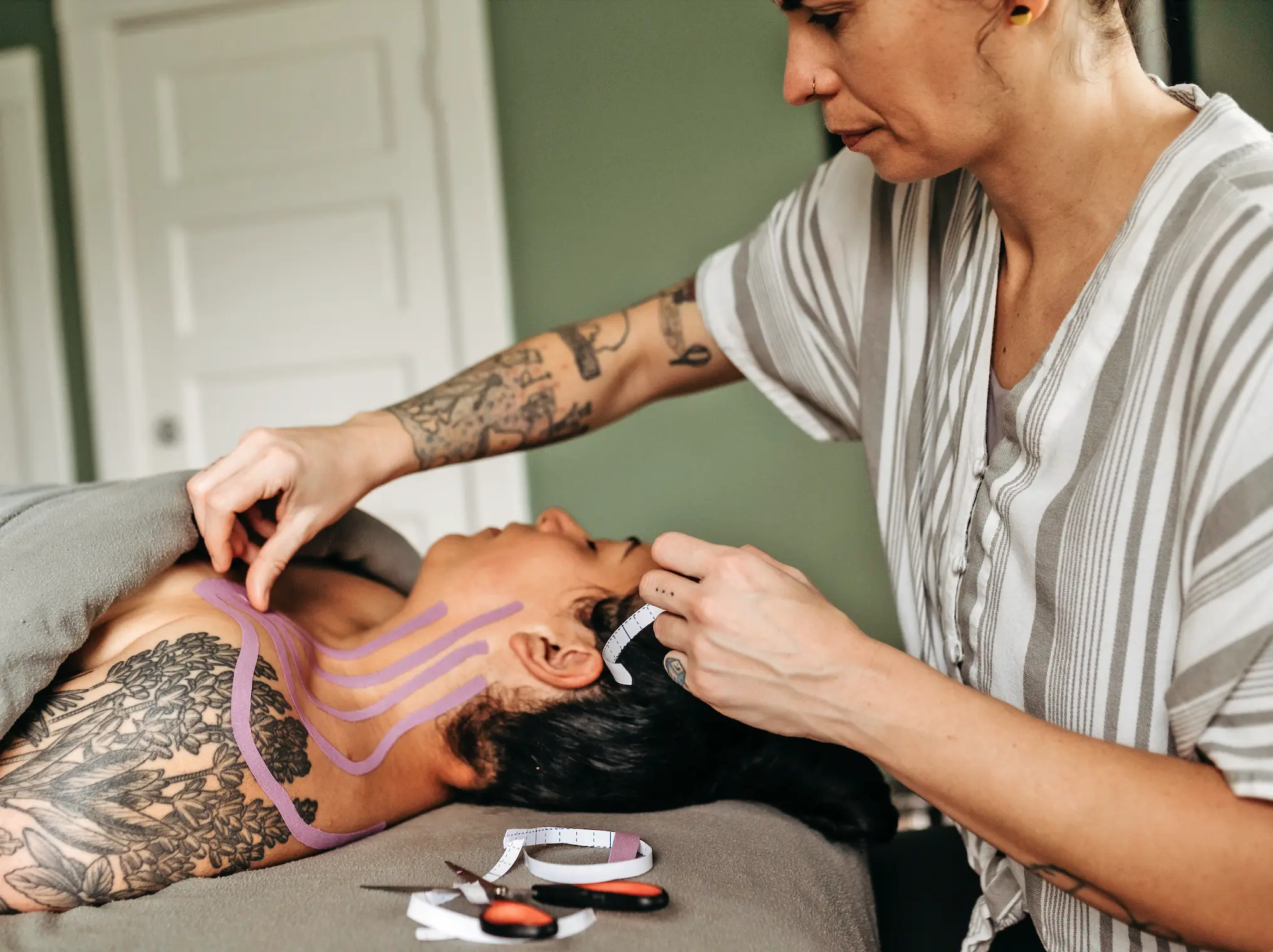
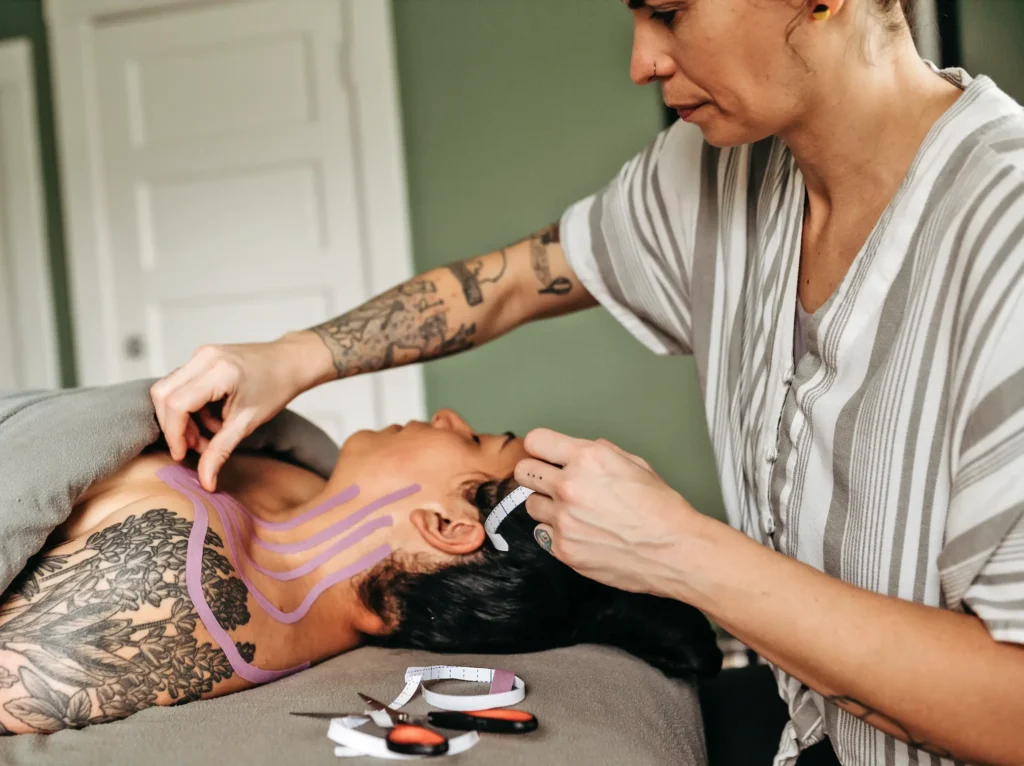
With over 400K Instagram followers and a decade of clinical experience, Leah Levitan of Lymph Love Club is on a mission to change everything you think you know about your lymphatic system.
Dive into Leah’s journey from working as a massage therapist supporting athletes in injury recovery and prevention, to becoming a passionate advocate for lymph literacy. Today, her mission is to support and hold space for those navigating health burnout and reconnecting with their bodies.
In this conversation, we debunk common myths about the lymphatic system and explore why it matters, how to work with it, and the profound, system-wide effects it can have on the body. Together, we unpack the importance of offering the right kind of input to nourish this intelligent network. Leah reminds us that supporting our lymph is often much simpler than we think!
Erin: How was your journey in becoming a lymphatic massage specialist?
Leah: I became a massage therapist 10 years ago, primarily working with athletes and focusing on injuries and injury prevention. I had an increasing number of curious clients asking me about the lymphatic system, and ‘lymphatic drainage’, but I didn’t know anything about it! I did a quick search and found Dr. Perry Nickelston’s work (www.stopchasingpain.com). He was just so passionate about this system.
Perry got me paying attention and excited about lymph, and ultimately inspired me to go back to school. I took my first training (Vodder Method), but this was the basics, ‘healthy systems only’ kind of thing, but more and more complex cases were finding their way to my table. I knew I needed more education to support those with lymphatic injury or disease, so I hit the books again to get certified as a Lymphatic Therapist. I wanted to be capable of working with all lymphatic systems, regardless of functionality, and becoming a lymph therapist helped me achieve that.
Erin: What led you to shift away from working with athletes after your training?
Leah: I have a totally different client population now, compared to when I started. The lymphatic piece has opened up a different way of working with the body. It’s more potent work, and once I started offering it, more clients dealing with chronic illnesses/pain found me…
I enjoyed working with athletes but it was hard on my body and, over time, I felt more drawn toward the lymphatic niche, which was centered on sustaining quality of life, helping people get out of bed comfortably in the morning, and supporting their return to everyday activities.
Erin: What brings people to you?
Leah: We see a lot of Lyme disease, fibromyalgia, autoimmune conditions, hypothyroidism, hormone disruption, gynecological conditions (endometriosis and PCOS), and connective tissue disorders such as Ehlers-Danlos syndromes (EDS) and Lipedema. Oftentimes people don’t know what they have going on, but they know they have chronic inflammation that has caused some sort of systemic imbalance. Many providers don’t know what to do with cases like these, the conditions aren’t always as tangible or absolute as, say, cancer.
We also see people with cancer in various stages. During and after treatment, especially if they’ve had breast reconstruction and lymph nodes have been removed. Having lymph nodes removed from the body will put them at risk for ‘lymphedema’, which causes protein-rich swelling and currently has no known cure.
Erin: How can working with the lymphatic system positively impact someone suffering from chronic illness?
Leah: Ultimately, when we change the fluid environment of the fascia, we change the body’s internal sense of safety, moving it out of survival mode and into a state of repair. Working with the lymphatic system is about shifting the body’s “internal climate” and addressing stagnation so fluids can flow more freely. In chronic illness, the fluid that surrounds our cells can become congested with metabolic waste and inflammatory debris. When these materials back up, it creates a communication breakdown; hormones and immune signals can’t reach their targets, leaving the nervous system pretty turned up.
By using targeted movement and pressure to restore flow, we’re flushing the pipes and restoring the health of the entire landscape. Clearing this toxic burden allows the immune system to stop overreacting and helps the endocrine system find its rhythm again.
Erin: How much should we be actively supporting the lymphatic system, and how much of its function happens naturally without intervention?
Leah: I would argue that we all need lymph work, often and throughout each day. This is due to our sedentary culture, and the fact that our lymphatic system doesn’t have a central bump. The cardiovascular system has the heart to push blood, but lymphatic fluid relies on muscle and joint movements to create pressure changes that get the fluid moving. Because many of us spend so much time on screens, our arms are locked in at the sides of our bodies, our hips are fixed in one position, and our knees are always bent, which can really slow down the system. We’re designed to be moving all the time, think back to our ancestors (hunters/gatherers) that had to seek out nourishment in order to survive. Many of our resources today are brought directly to us, meaning that movement is something we have to intentionally seek out now.
Erin: Would you consider that stagnant lymph can be responsible for causing disease?
Leah: I wouldn’t say ‘stagnant lymph causes disease’ in the way a virus or a genetic mutation does, but it absolutely creates the environmental conditions that allow disease to thrive. A stagnant pond isn’t “bad” but because the water isn’t moving, it becomes a breeding ground for algae and bacteria that wouldn’t survive in a flowing stream. So, we want to keep things moving because that’s how daily biological battles are fought and won, and stagnation is the precursor to dysfunction.
Erin: What’s the connection between the cardiovascular and the lymphatic system?
Leah: Together, our cardiovascular system and lymphatic system make up our circulatory system. We are receiving oxygen as we breathe, and blood is delivering nutrients to our cells, but only about 90% of the blood that’s circulating actually goes back into the cardiovascular system by way of our veins. The other 10% is what the lymphatic system picks up, the excess fluid plus the cellular waste. So, nutrients are coming in from the arterial side and the waste and excess fluid are coming out from the lymphatic and venous side. The extra fluid is filtered through the lymph nodes before it goes back into the bloodstream. These two systems are interconnected, we can’t talk about one without thinking of the other. Blood and lymph are BFFs.
Erin: Would you say that imbalance in the cardiovascular system affects the lymphatic system and vice versa?
Leah: Absolutely. Going back to the sedentary piece, not moving the body raises the pressure in the tubes all this fluid flows through which can then cause friction. That is where we can start to see wearing away at the vascular walls. Diet and stress management play a huge role, but a lot of the cardiovascular diseases that we see are a consequence of the change in the fluid dynamics of the body, which is mechanical. Without that healthy blood that is meant to be nourishing the cells and sending oxygen to the body, that can really throw things off and cause more fluid problems. When one system is overburdened, the other has to pick up the slack.
Erin: Is there a major organ connected to the lymph system?
Leah: The spleen is considered the ‘largest lymph node’ in the body. It’s not really a lymph node but it helps in maintaining balance between red and white blood cells so it is a huge part of our immune system. Another important lymphatic organ would be the thymus gland, that’s where our immune cells end up when they leave our bone marrow. They’ll go to mature, to get to ‘know’ the body before going out into circulation. It’s like boot camp for them.
Q: What inspires you about this kind of work?
Leah: “Man’s ability to heal and the wisdom of the body.”
Erin: What inspires you about this kind of work?
Leah: Man’s ability to heal and the wisdom of the body. I feel like the lymphatic system is one of those things that carries a little bit more spiritual and energetic weight to it. I call it our “soul-er” system because one of the things I noticed immediately when I started doing this work is how it pulled emotions out of people. Clients were having emotional releases left and right, which kinda threw me for a loop at first! When I was working with athletes and being hyperfocused on a target tissue, this just didn’t happen. Lymph work mobilizes the fluid around the cells, which does something that science can’t fully explain yet. It makes more of it, and gets it moving faster, and I think that really gets some sort of energy moving through the body that was previously not able to fully express. It puts people in a position where they can better relate to their body, and without a doubt, increases body awareness and inner connectedness. Interoception.
Erin: What would you like the world to know about the lymphatic system?
Leah: Hmmm… that it’s not as hard to take care of as the internet tells you! And that taking care of it will change your life in some way, shape or form for the better.
Erin: Is there anybody who doesn’t need or wouldn’t benefit from lymphatic work?
Leah: I think we all need to love our lymph, but manual lymph drainage, the specific modality, definitely requires strong heart and kidney function. We’re creating massive pressure changes, and the organs need to be in good shape to meet that demand.
Erin: Why do all beings need lymphatic work then? Does a lion need lymphatic work?
Leah: Well a lion is doing its own lymphatic work just by being its authentic animal self. I think because we are animals, living in captivity, we aren’t really in the environment in which our bodies are designed to thrive in. And I think that awareness and perspective shift to our lymphatic care is a game-changer because it doesn’t have to take a lot of time, it just takes attention, awareness, and a little know-how.
View this post on Instagram
Erin: Can you debunk some lymph myths that you hear often?
Leah: Yes! People often hear that the lymphatic system is responsible for ‘detoxifying’ the body. The lymphatic system does not detoxify, it picks up the waste and delivers it to our detox organs so waste can be packaged up and physically eliminated from the body. The lymphatic system is part of the process, which is complex, but it doesn’t actually do any detoxifying. Also, ‘super light touch’ is not always the best or only option for moving fluid. Less is best for some, but it really depends on what the tissue feels like. If it’s stiff, feather-light pressure ain’t gonna cut it.
Erin: Being that the lymphatic system is not detoxifying the body, can you still assist organs of detoxification through the lymphatic system?
Leah: Totally! The lymphatic system is everywhere, and this includes in and around our detox organs. The skin, lungs, colon, liver, and kidneys can be supported through living a healthy lifestyle focused on hydration, nutrition, movement and, above all, nervous system support. I encourage my clients to work on those ‘pillars’ of health, before buying fancy supplements, potions, and tinctures. Also, sweating utilizes our largest detox organ (our skin) which makes the lymphatic system’s job easier. Try to sweat, y’all.
Erin: What are some side effects that you can feel after doing lymphatic work?
Leah: The fun stuff is an increase in body awareness, a deep sense of calm/safety, a really great poop, and more urine production offers us a temporary ‘depuffing’. The less fun stuff is feeling tired or a little run down after, like you’re coming down with something. It takes energy to detox! In severe cases, where waste that’s been accumulating for some time is released too quickly, can cause a Herx reaction or “detox flu”. Loose stools, hives/rashes, things flushing out of you but maybe not in the best way, cold sweat, headaches, or joint pain.
Erin: Can you give us some advice on how to do lymphatic massage on ourselves?
Leah: There are a few ‘rules’ but they’re really about working with the design of the body. My advice is to always start at the lowest point of pressure, behind the collarbones, near the heart. When starting drainage, stimulating this area changes the pressure. You can’t push a river. This is based on the drainage theory and encourages motion to drive fluid back into cardiovascular circulation via the veins into the heart. The intent is to follow the suctioning effect and aid in that flow.
Some tutorials teach you to start at the hands and feet, but the distal (or most outer) portions of the body are the highest pressure points, therefore it’s preferable to work closer to the body and then move further away. For example, if you’re dry brushing your body, start by brushing the top of the arm before moving down to your elbow, then forearm, then hand. It’s like the opposite of most of what you see but it makes much more sense for your design.
Erin: Can you explain to us the importance of having a clear intention behind doing lymphatic work, maybe share with us examples of two different people that may need completely different protocols?
Leah: Different strokes for different folks. A high-performance athlete looking to “flush and refresh” after a heavy workout and prevent injury vs. someone navigating a chronic illness with a higher toxic load will need adjustments. We can’t take a sledge hammer to a lymphatic system that’s battling chronic inflammation, it doesn’t go well. For the athlete, the intention is to stimulate the whole system (superficial and deep) and the protocol can be quite robust. But for someone with chronic illness, the intention must be to move slow, subtly increasing their tolerance over time.
Erin: What would you recommend for someone whose mobility is limited for a period, how can they keep things moving safely?
Leah: I find that my folks who aren’t able to get as much activity, it can be really helpful to lean on tools such as vibration plates. If someone in very good health asks me if they should get one, I’m kind of like: “…What’s the point?” But for somebody that has a chronic illness and is not able to get out of bed, a vibrating platform or hand-held tools could be super beneficial because our lymph LOVES vibration.
We need more accessible movement. Breathing is a movement, so I will often work with my clients to make sure they’re expanding their ribcage and engaging their diaphragm. Trying to get movement into their tissue that’s not ‘exercise’ can feel tricky but mindfulness, imagination, slow and gentle movements (I love Qigong), and using gravity helps. Practice micro-movements, ‘movement snacks’ if you will, put your legs up the wall, or wear compression socks… Anything that’s going to create a pressure gradient is great.
Erin: Does hydrotherapy move lymph?
Leah: Yes, the depth of the water creates a natural compression that our lymph loves. Couple that with movement in the water? The temperature of the water to create widening/narrowing of the fluid tubes? Always a winning combo.
Erin: How often and for how long should we be doing lymphatic massage?
Leah: Depends on the person and what their day looks like. Moving less? More lymph love! Super active day? You’re probably good, you’ve worked with the design of your body and rocked your fluids. I do recommend everyone start their day with Dr. Perry’s Big 6 though! It’s so quick and easy, there’s no excuse not to do it.
Erin: How does lymph massage impact your daily life? Do you notice if you skip a few days?
Leah: I definitely notice a difference on the days I skip! I consider myself a healthy and very active (yet very sedentary!) person, and the results are cumulative. If you do something once, it’s like never doing it at all. Especially when we’re talking about lymph, fascia, and the nervous system. It takes time to see changes because they’re so dang subtle. You should see a ‘before’ photo of me prior to starting my lymphatic self-care practices. It’s pretty wild.
Erin: Can you talk to us about the glymphatic system? The brain’s own waste clearing process?
Leah: ⅓ of your lymph nodes live in our head and neck, but there are no lymph nodes within the skull, just super fine vessels to promote microcirculation. The glymphatic system is most active when we’re in non-REM sleep, which is why sleep is so important. It removes the plaque that can start to form on the brain, which has been linked to neurodegenerative diseases like Parkinson’s and Multiple Sclerosis. And so it’s almost like we’re future-proofing our body when we’re taking care of our glymphatic system. Your 80 year old self will thank you.
View this post on Instagram
Erin: How can myofascial release complement lymph movement?
Leah: Fascia is the scaffolding, the architecture, so if it’s not moving well neither is the fluid. These two systems are deeply connected and SMFR is the secret sauce for lymphatic health!
Erin: Are there different layers in the lymphatic system?
Leah: There’s a superficial and a deep lymphatic system and these layers are boundaried by our fascia, which shapes our drainage pathways dictating how fluid flows. The superficial lymph runs in the skin and just beneath the skin before it drains down into larger channels. There are also superficial and deep lymph nodes. When you do dry brushing, you’re mainly targeting superficial lymph, so you need both aspects here because the main lymphatic channel in the body is the thoracic duct and the cisterna chyli, a passageway that is attached to the front of the spine. Together, they drain all of the fluid from the vital organs in the lower body. Lymph travels through the thoracic duct to go back into circulation, where it drains about 75% of the body. The thoracic duct also passes right through our diaphragm, which is why breathing is also such an important part of how fluid moves around. A big part of how fluid travels to the heart is through breathing. Another third of our lymph nodes live in the abdomen and pelvis so releasing the diaphragm and abdomen has a huge effect on the lymphatic system as well.
Erin: How can we apply different rolling techniques to support the lymphatic system?
Leah: Our first line of immune defense is the ‘superficial’ lymphatics, just below the skin’s surface. I like smaller, firmer balls for Pin + Stretch (shearing) techniques here. By leaning into the ball (compression), you squeeze the tissue like a sponge; the “rebound” creates a vacuum effect that pulls fresh fluids into the target tissues. Because the surface system is a low-pressure environment, it relies entirely on movement and skin-tension to drain.
The deep lymphatics drain our muscles, joints and vital organs. These structures require massive pressure changes to move against gravity. A large, soft, and flexible ball (like the Coregeous) is the perfect tool here; safe + gentle for the “nooks and crannies”. Opening the ribcage (front, back, side), and hanging out in and around the armpits, groin, and abdomen is time well spent. This targets the body’s main pipeline that draws fluid up from the gut and lower body.
Erin: What’s something that is moving you or inspiring you right now?
Leah: Mechanotransduction. It’s the coolest thing to know that moving and changing the shape of your cells is the very thing that moves and shapes our biology. Truly inspiring!
Interested in learning more?

![New to Self Massage? Start here! Self Myofascial Release Techniques Using Massage Balls [button]](https://www.tuneupfitness.com/wp-content/uploads/2023/07/SelfMyofascial_Blog_Journey_Button.png)

Wow! The wild world of lymphatic drainage I had never thought or heard very much about. I love fluid as a connection between the nervous system, fascia, energy, emotions, and the whole body. Thinking about “reading” different peoples’ lymphatic systems for what they might need invites me to see or listen to peoples’ fluids a little differently. I also love the idea that working with the lymphatic is good for every body, and that it enhances interoception. Great to work with the fluid system in a pro active way too. “Ultimately, when we change the fluid environment of the fascia, we change the body’s internal sense of safety, moving it out of survival mode and into a state of repair. “
Wow! 🤯! Information overload! In the best way. Thank you so much, Leah, for sharing your knowledge and powerful insights on the lymphatic system. You definitely debunked a lot of thoughts for me. I didn’t realize the relative connection of blood and lymph and how they function together. Another light bulb moment is how accesible it is to do self-lymphatic drainage. I’ve been asked before if what I do (Fascia stretch therapy) provides lymphatic drainage, and I always thought it did, but now I’m confident it does!
Truly inspiring – the interview, the insights, and the comments. A perfect reminder why so-called ‘hive mind’ can be so useful & uplifiting: Leah’s expertise & engaging observations, along with those of fellow YTU certification training students & their own experience & expertise – winning combo.
I’ve heard of & read a bit about MLD before, but much hungrier now to learn & explore more. Leah’s ’10 myth busting’ IG post was very enlightening.
I also had to look up a few of the conditions mentioned at the start of the interview. Leah mentioned “PCOS,” which apparently is now moving toward being called “PMOS,” a perfect example of how health knowledge is never in fact a ‘stagnant pond,’ but rather a moving river of continual research, conversation, & discovery. I also initially thought that “lipedema” was a typo, but turns out no – it’s a different condition than “lymphedema.” More learning! Woohoo! 😀
https://www.mayoclinic.org/diseases-conditions/pcos/symptoms-causes/syc-20353439
https://my.clevelandclinic.org/health/diseases/17175-lipedema
https://my.clevelandclinic.org/health/diseases/8353-lymphedema
Thank you for this article! I was fortunate to attend a fascia/lymph event. Both areas are so deeply intwined. It still amazes me that we are this “advanced” in technology but are just now truly beginning to understand and recognize the importance of fascia and lymphatic massage.
The body is an amazing thing and has so many systems that work well together when given resources. I love how you stated we are living in captivity and not in spaces where we can thrive. Such a great description. I’ll be referencing this quite often.
This is a great resource to share with clients.
It’s so interesting how both Fascial release and Lymphatic drainage, we can experience our emotional release. I find it so fascinating because I’ve been looking for more ways to connect our mind and body and this article helped me learn that there’s so much more to it. Thank you for this beautiful share!
I loved this article as I recently started teaching a Yoga for Lymphatic Flow class. It gave me additional information that I can share with my class. I loved the clarification/explanation that a stagnant lymphatic system does not cause disease, but instead causes the environmental conditions that allow a disease to thrive. To me, this is a very empowering statement – that by working with the lymphatic system, we can assist in preventing disease and illness on a deep level. Yoga is a nice fit for this work because of the emphasis we put not only on the movement, but the breathing, which is an important part of how fluid moves around.
For a long time my only point of contact with the lymphatic system work was the social media trend to use it to decrease bloating or puffiness. And even in trainings such as preparing to become a Personal Trainer it wasn’t really mentioned. So what stopped me in my tracks and got me curious was the line: ‘when we change the fluid environment of the fascia, we change the body’s internal sense of safety, moving it out of survival mode and into a state of repair’. As well as the line ‘stagnation is the precursor to dysfunction’
This article is very interesting but so very new to me. The Lymphatic system is not something I know too much about. I love that Leah’s work is centered on sustaining quality of life, helping people get out of bed comfortably in the morning and supporting their return to every day activities. The article is a bit confusing to me. I would like more information and don’t really want to sift through the internet. Being a former first responder in my past life I loved reading evidence based studies. Could you please point me in the right direction? I appreciated Leah’s honesty regarding Lymphatic work fun stuff being an increase in body awareness, a deep sense of calm and a really great poop. But where fluid has been accumulating for some time sounds scary with: detox flu with loose stools hives/rashes, cold sweat . headache joint pain. I would like to know what does it mean starting the day with Dr. Perry’s big 6? As I said I would like to know more? and where to find more info? Finally I found it really interesting as well that I could start helping my lymph system using the coregeous ball. Thank you.
When Erin mentioned encouraging clients to work on the “pillars” of health of hydration, nutrition, movement and nervous system support – it makes me think of the 3 pillars of health of Ayurveda – ahara (inputs, nutrition, digestion), brahmacharya (energy management, stress management) and nidra (rest).
This article clearly explains how the lymphatic systems works. It made me seek more information and sign up for the Lymph Body Connection workshop in the Spring of 2026. I was also a believer in the myth that the lymph nodes detoxify the body. I took a couple of key phrases in this article and have used them in explaining how the lymphatic system works.
Thanks a lot for this really very fascinating and great interview. I am always in awe, when I read about the miracle of our body.