
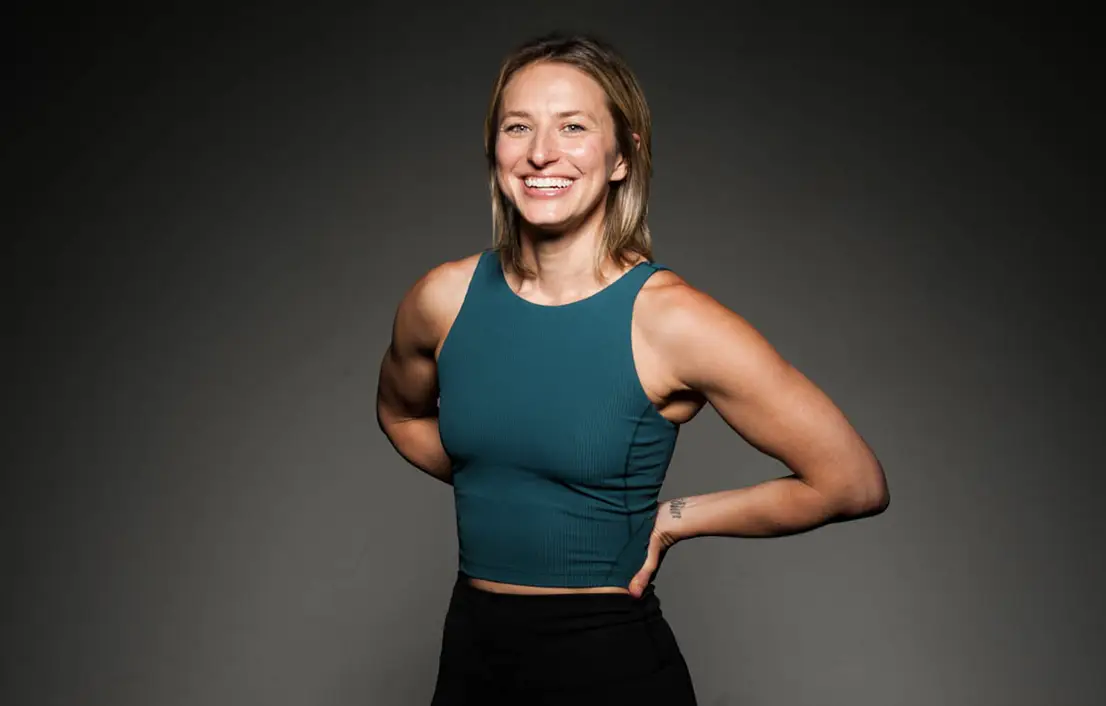
Coach and personal trainer Jana King is joining our MOVE BREATHE ROLL programming, sharing how strength training, nervous system awareness, and adaptability support lasting health beyond the gym.
A seasoned fitness professional, Jana honors each client’s individuality and recognizes that everyone’s needs are different. With a strong background in coaching and training, she reminds us that health and fitness go beyond a perfect deadlift—it’s about nurturing the nervous system and cultivating humility, awareness, and balance in the body.
A note about Jana King from Tune Up Fitness co-founder, Jill Miller:
Research consistently demonstrates that muscle mass is one of the most protective elements against pain, supports metabolic health and provides whole body resilience. To that end, we are introducing a new series of classes called SENSEable Strength into the MOVE BREATHE ROLL classroom that asks you to lift some extra weight to build more muscle. Our first expert is Jana King. Jana is a strength and conditioning coach with a BS in Kinesiology from USC and has worked with professional sports teams, multiple fitness chains and more importantly has logged more than 15,000 client sessions with clients at every age and stage of health. She’s a brilliant coach with a knack for helping people stay healthy and strong through pain crises.
I’ve known Jana for more than a decade – first as a student of mine in classes and trainings. Then I began doing private strength sessions with her two years ago and she immediately identified strength and coordination blind spots with me and has been with me for some of the most challenging times in my life.
Jana brings a SENSEable Strength series to the MOVE BREATHE ROLL classroom to help you build robustness on top of the amazing foundation that you’ve built.
Her sessions are full of simple and compound movements that will ramp up your power, strength, endurance, speed and so much more. Jana’s sessions also combine rolling, breathwork and brain work leaving you with buckets of energy [after the soreness wears off :)]
From Architecture to Kinesiology: Jana King’s Path into Movement
Erin: Can you tell us a little bit about your life journey and professional career?
Jana King: I was an athlete growing up, and have always been interested in moving my body. I went to college for architecture and in my second year changed to kinesiology because I missed moving so much! I felt architecture was not a fit for me but interestingly enough, I still think it is part of my philosophy, which is trying to get people to find efficient use of their space. That was also my interest in architecture, some kind of design with flow and practicality. I went into fitness thinking of that connection and that common thread.
I worked at Equinox for 8 years, which is where I found out about Jill because we were teaching in the same branch, but never met. I had done a trigger point certification, but I left Equinox and started to do training at Orange Theory Fitness. In 2017, I left and created my own studio, which is where I now see clients. In 2021 I joined Equinox as a member and remembered Jill and started to take her class regularly for more than a year. And now we often trade services.
Erin: What inspired you to transition from working in gyms to owning your own studio?
Jana: Overstimulation! Being in those environments, being in a big box gym and having to do your 8 hours a day of teaching can be a lot. I like the personal approach of working with individual clients. That experience really taught me how to manage my personal fitness, like how to personalize workouts, record keeping, and provide a high level of service. It has also really encouraged me to continue developing my own education.
I do miss working in larger environments and being tapped into what’s “new” out there and what other coaches and teachers are doing. Something I struggled with in larger environments is that I learned that people often don’t care about what they’re doing, even if it looks like they’re going to injure themselves. You can try to interrupt and try to impact somebody on a personal level but it’s really about saying the right cue at the right time; I really honed in on my timing with giving cues. In large group classes it is generally harder to educate students.
In my studio now, the aesthetic creates a calm and peaceful environment, it doesn’t scream “bigger, stronger, faster”! I have all my little tools, my anatomy posters and skeleton for my clients to view. I want clients to be able to focus on their form and alignment to avoid injury. I’m trying to create an environment where my clients are not treating exercise as a means to an end, but more of an experience and connection with their bodies. You’re not working out for punishment, you’re working for internal and purposeful experience.
How Tune Up Fitness Tools Support Strength and Recovery
Erin: How do you use Tune Up Fitness methods personally?
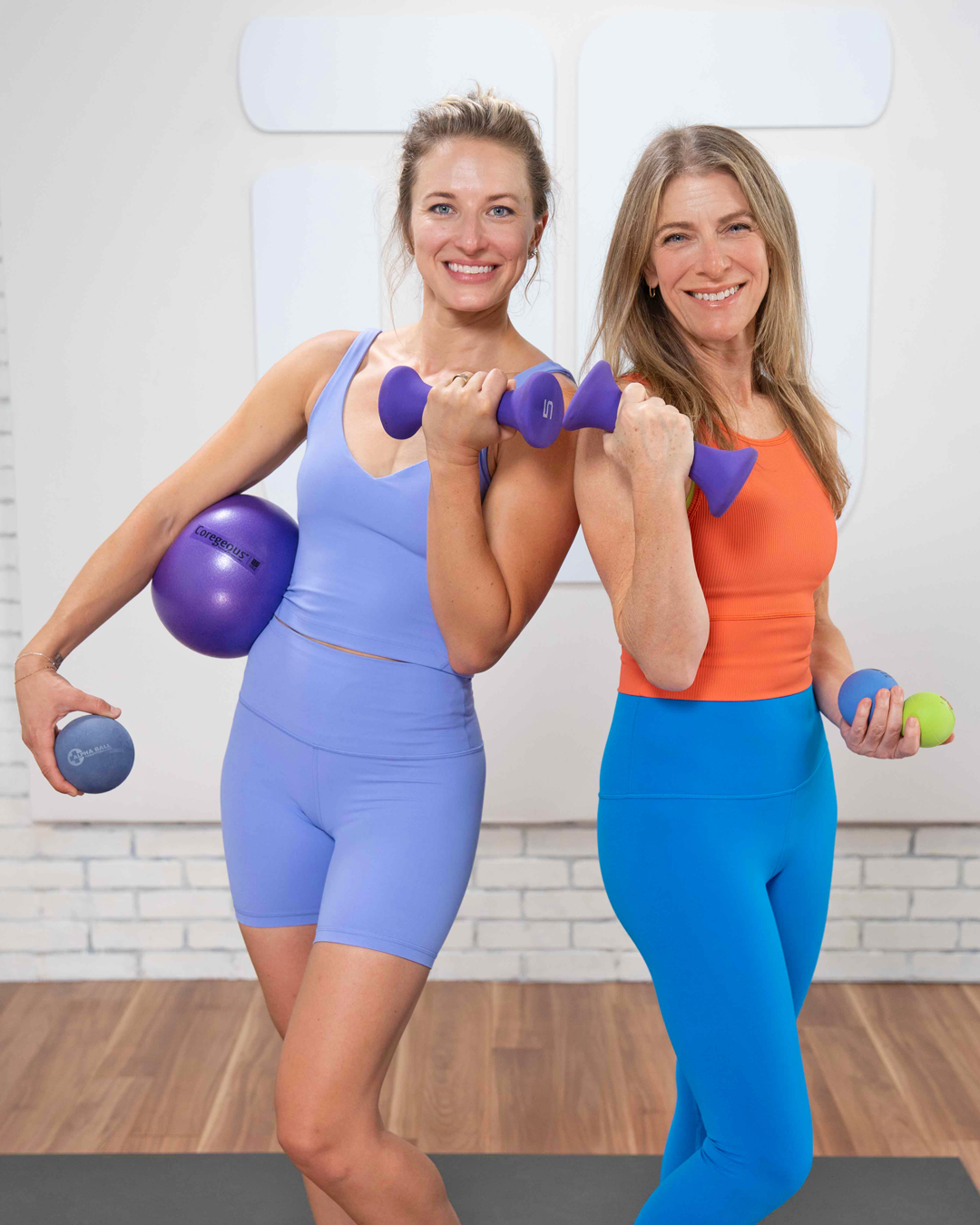
Jana: They have helped so much. I often pause during workouts to roll out when I feel the need to connect to a certain body part. Then I go back to my set and it always feels so much better. I use the tools in the same way I use them with my clients. Primarily we warm up with rollouts, as a preworkout for lift sessions or before running. I was amazed, one time I did a calf and shin rollout routine before I ran with a 10 lbs vest (something I hadn’t done before) and had very minimal soreness the next day. I thought, there is no way I would have felt like that if I hadn’t rolled out.
I also use the breathwork techniques from Body by Breath. After a stressful day, I bring out the Coregeous ball and do my breathwork. Because I show my clients this work multiple times a day, I don’t actually have to spend much time on my own since I’m already doing it all day long! If you’re intentional about the techniques, they can be effective. I have a client that laughs at me because I can get so into a rollout sometimes that she will ask me: “Do you want to rollout the other side?”
Erin: In what ways do you modify the work for clients versus your own practice?
Jana: Often people hire me to get out of pain or to increase their fitness. That can be a harder thing because if a client is coming expecting to use some dumbbells or getting their heart rate up, I can’t spend an entire session just teaching them about external rotation of their shoulders right!? So I think the main difference for me personally is that when I am doing a rollout at home, I love doing a long slow session, spending a lot of time in an area and not doing anything too vigorous.
With clients it’s more like ok, let’s get in touch with this. Unless they are in pain that day or there is a specific injury, I limit the Tune Up Fitness work to 15 minutes or less. If there are clients that have high levels of stress, I’ll add breathwork towards the end of their sessions.
Erin: Do you have go-to rollouts that you use often with clients?
Jana: Yes! I love mapping out the scapula with the Alpha ball. I also love using the Yoga Tune Up ball around the sitbones, glute plow and rolling out the adductors. I rollout the feet with my clients at the beginning of a session because so many people disregard the importance of sensing their feet when working out.
Erin: What benefits have you noticed in your clients with techniques such as scapula mapping?
Jana: It all comes down to proprioception. It creates the embodied understanding that this bone sits on top of my ribcage and it has specific borders and I want to try to feel all of that when I am moving whether it’s rowing or overhead pushing/pulling. Feeling your scapulohumeral rhythm is so essential to shoulder health. If you have limitations around it, you won’t be as strong as you could be. People have so much stiffness from working on computers, sitting or simply being stationary. Rolling out can not only soothe, but also helps them tap into specific body parts and how it should be functioning.
I also love the lumbar hammock from Body By Breath. It helps decompress the low back and brings awareness to where the diaphragm is, how to breathe into the diaphragm, and the tactile feedback you get back.
Breath Mechanics, Core Stability, and Injury Prevention
Erin: How important is to understand proper breathing mechanics in the work that you offer?
Jana: Ultimately it’s about understanding how to create intra abdominal pressure. If you are not able to access your diaphragm fully, you will not be able to create as much intra abdominal pressure which then disrupts your pelvic floor. The lack of stability in your core will impact how your shoulders and hips move. I often teach compound lifts, full body strength moves like deadlifts and squats, and if we’re loading them heavy, and clients can’t create that stiffness in their core, then they’re more prone to injury..
Erin: Can you guide us through the proper breathing mechanics during a deadlift or when we’re dealing with a lot of weight?
Jana: Exhale upon exertion. So in a deadlift, you exhale while lifting up. You inhale as you go down. The main part is generating stiffness at the bottom of the deadlift, right when you are lifting. Proper breathing allows you to meet better stability for your spine while you’re exerting and contracting your muscles.
When we use diaphragmatic breathing, our pelvic floor also helps with core and then the hips don’t have to work as much to stabilize the pelvis. Everything works together harmoniously and in coordination.
Why Strength Training Improves Quality of Life
Erin: How important is strength training?
Jana: It is very important! I see it as the swiss army knife of fitness. The most important thing about strength is that you want to be trying to get close to failure, as long as you’re feeling things in the right places. I have a client that comes 1-2 times a week, she often texts me things she’s noticed since we started working together: I was able to carry my suitcase up the staircase and she didn’t have to use the stair rail getting out of the pool; so it’s about quality of life and interacting with your environment. The tools provided by Tune Up Fitness help people understand their body so that they can get even more out of strength training. Strength training also addresses mobility issues, endurance, and helps with daily living tasks by making them easier. A swiss army knife does not work with precision things, and that’s why the variety in Tune Up Fitness products and trainings complement each other so well. It allows you to get that filet knife, and get a better cut. Roll Model balls give me a window to explore a wider range of motion and maintain it. Once clients can feel and understand that, I don’t need to rely on the tools as much and can shift more fully into strength training.
Strength training covers many of those needs—it raises the heart rate, builds muscle, and encourages self-awareness.
The Role of Curiosity in Long-Term Fitness
Erin: What are some of your challenges as a teacher?
Jana: I think there have been times when I was more naive thinking that I was helping clients only by seeing them once a week, which would make me question myself if that was really helping. I try to give people full agency, setting clear expectations, and informing clients that they are hiring me as a coach, therefore I am going to guide you and try to stoke your curiosity about everything within your body, but ultimately it’s on you. I’m not the music, I am just the speaker, I am the amplifier. You have to set the tone. But I do try to aim to give my clients tools to experience it all.
One of my main roles is to help people get out of pain and dysfunction, and I believe I can do that faster than most others (I’ll toot my own horn!). There’s definitely other trainers that can kick your ass better than me but you will do that program for 3-months, get burned out and then not know what to do next. I see fitness and wellness as very rhythmic and I am adjusting to my clients’ needs. Fitness should make everything easier, it shouldn’t bring you more stress. I like to provide long term tools and teach them enough that they can do this on their own or provide enough tools that they can go to a group class and feel confident and comfortable. I had a client share with me that learning about box breathing is what saved her from panic attacks, I just love being able to share these tools!
Erin: What are some industry secrets that you wish more people knew regarding how to build and maintain strength?
Jana: I don’t like dogma, so I don’t tend to gravitate towards any system that claims to be the “end all be all”. Not interested! I believe all of it is so complementary – the industry secret is that there are so many things out there because so many things work and there are so many factors of why it works for one person and doesn’t work for another. You have to stay curious and understand that you might try something and dislike it. All these experiences build upon each other.
For example, I am in good shape, I have lean musculature and I get asked what I do to workout all the time. So I tell them what I am currently doing but explain that I was a competitive swimmer growing up, then I did body building workouts, then I got introduced to olympic lifting, then I did kettlebells, then I didn’t touch kettlebells for many many years, then I only did cables and never touched machines, and then I started to re-incorporate machines, and then I did sandbags, and the story continues! My point being, there is a long history of curiosity and trying different things. One thing affected my ability to do the next thing. Everybody wants to find THE right thing but I think the secret is that you have to stay curious, you have to be engaged, you have to be involved, and what you might do today might not work for you in 3 years. And not necessarily because it’s not working but because you might need more variety!
The secret is that you have to stay curious, you have to be engaged, you have to be involved, and what you might do today might not work for you in 3 years.
– Jana King
Erin: How do you feel in your body?
Jana: I am fortunate enough to say I have never not felt good doing strength work. But what I have noticed when looking at videos of the past is that I didn’t have great form. It was great for the level of knowledge and internal awareness I had at the time. I look back at videos of myself doing kettlebells when I thought I had such good form and now I feel they look a bit sloppy! I am constantly improving. Now I value integrating everything I have learned, I feel good where my strength is and what I am most proud of is that I don’t have to do it so often. Strength training is now approached as a sport or fitness routine, but once you build consistency and build a solid foundation, you don’t have to do it as often.
Erin: How often do you need to strength train to not lose it?
Jana: You don’t actually start to lose strength for up to 21 days. That’s where I got more interested in plyometrics. Power and speed decrease faster than strength. Strength gives you a robustness, a slower and controlled matter to understand your body and to know how to direct, generate, and transfer force. For power and speed you have to trust your body more. With strength, you can be a little bit more hesitant and not get injured.
Advice for Beginners Building a Strength Foundation
Erin: What is your advice for someone who is starting to strength train?
Jana: I would try to start 3 times a week with a full body routine, focusing on a horizontal push or pull, a vertical push or pull, then 2-3 leg exercises, and I also love some regular core training as well. Three times a week would help build someone’s foundation if they have been diligent and practice progressive overload. Then after 6 months or so, they can start to introduce some low level plyometrics and start introducing those ideas of speed and power.
Erin: What inspired you to do the program with Jill?
Jana: The inspiration was trying to take everything I have learned in the last 20 years and distilling these vital training properties for the beginner. I’ve crafted a safe entry point of exposure for someone who has never done any strength training. It’s a taste of strength, power, speed and endurance with tips on how to go further with all of these elements. It’s meant to be a training that goes beyond just bicep curls or chest presses. The whole process has been really fun.
Erin: Final words of advice?
Jana: Don’t let it be complicated. Do something that you enjoy, don’t get tied up in: “Is this better than that?” I see people who play tennis all day that never do strengthening and they’re so happy, everybody has their own taste buds. But I do think we all have a self-responsibility to keep our bodies in tune.
![New to Self Massage? Start here! Self Myofascial Release Techniques Using Massage Balls [button]](https://www.tuneupfitness.com/wp-content/uploads/2023/07/SelfMyofascial_Blog_Journey_Button.png)

Gah! – Niclas stole my favorite part! ;-p Though for me it was the ‘stay curious, stay engaged’ part. Jana, I love your candor about how your own fitness journey has evolved over time, and how common that is – our interests, relationships, tastes can all change over the years. The key is not sticking to a single routine forever, but sticking to a commitment to exercise and self care, in whatever form(s) those take.
Great article. I can relate to incorporating yoga tune up balls as part of any workout. “the pause to roll concept” as a reason to connect with a certain body part. I find myself doing this more and more every day My Yoga Tune up balls go wherever I go. I also was intrigued with your concept of being curious. . I love the quote “fitness should make everything easier not bring more stress” . Finally as I age I can again really relate to change in respect with your comment. “What you might do today might not work in 3 years”. Thank you for a article that I really personally related to.
Thank you for your sharing your knowledge and words of inspiration. Movement is vital, and increasingly important as we go through life. I love your one-size doesn’t fit all approach, and that finding a form of movement that fits you best, and that you actually enjoy doing, with create greater results than doing something you hate or out of guilt. I love that you use your therapy balls with every session. I have used them more as a recovery tool than a warm up tool and am now very curious to apply therapy balls as a warm up in my personal and private sessions with clients!
Not working out as a punishment is such an important reframing. I love the joy and emphasis on experiencing your body during movement. It’s so cool to have a teacher encourage celebrating what your body is capable of rather than pushing yourself out of self judgement or feeling unworthy.
Such a vessel of information on how to integrate the Roll Model and Body by Breath work into a fitness space. I had clients come to me who want a quick solution to their aesthetic goals or for pain to disappear, but who are very disconnected from actually sensing their body parts working or their movement. This is a great reminder that as a teacher and coach we can refrain from buying into the ‘fun, fast, and easy’ slogan of many fitness classes and offer deeper work that creates lasting change whilst still achieving the client’s goals!
Thanks for this great interview! I resonated with so much of it, and I’ve enjoyed Jana’s classes as a compliment to my own strength training. One thing that I’ve been paying attention to is the exhale during exertion. That kind of just happens naturally when you lift weights (or children, or move furniture, etc.), but often in yoga it is cued to do the opposite. I’ve been playing and experimenting with that and have discovered some movements/positions just feel really different (better!) when done in the exhale or even a held breath (like tubular core).
Yes! I always tell my students “Whatever you give or do to your body, it needs to come from an intention of nourishment, not from one of punishment”. I think we all need to learn how to be a good parent to ourselves and have more awareness of how our body, mind & spirit to work together harmoniously. Just like our diaphragm needs to work together with our core and pelvic floor 🙂
Thank you for explaining so well how important balance is for overall health and wellness! You really articulated beyond the “lift heavy” trend to explain why we need strength training incorporated into our wellness regimes alongside these other beneficial modalities of breathwork and rollout.
Loved the secret to stay curious, be engaged and involved.