
In a fast-paced world hungry for instant and easy solutions, many people are turning towards yoga nidra to get grounded and move into a restorative, restful state. This burgeoning meditation practice systematically guides you to physiologically remove tension and achieve sustained conscious relaxation with little more than breath, mindset and body position.
It’s no surprise that yoga nidra is experiencing a surge in popularity as a practice for stress reduction, improved sleep, and overall well-being. Through this soothing, downregulating practice, not only are all the systems of your body and mind reset, but yoga nidra also has an emerging role as a sleep meditation technique. Studies say those who use yoga nidra for sleep have fallen asleep faster and experienced improved sleep quality.[1] For Jill Miller, author of Body By Breath, rest and recovery, including yoga nidra, are a critical buffer against the ever-chaotic flow of daily demands.
What Is Yoga Nidra?
Yoga nidra meditation is a guided practice that induces a conscious state between waking and sleeping. While resting in a comfortable position, practitioners can explore different aspects of the mind, senses, and body while cultivating awareness and observing consciousness. It’s a prolonged liminal attention state that acts as a reboot.
Liminal – A transitional phase where one moves from one state to another
First written in the 8th century BCE, components of the practice have been rooted in ancient Indian philosophy, but it wasn’t until the 1960s that Swami Satyananda Saraswati updated and systematized this novel relaxation practice and introduced it to the public. Modern-day practitioners use yoga nidra as a powerful tool to manage anxiety, improve sleep quality, process trauma, and dampen stress. Yoga nidra is widely praised for how it lowers cortisol (stress hormone) levels, sustains whole body calm and builds a less reactive nervous system.
Dr. Andrew Huberman, a neuroscientist at Stanford University, coined the term non-sleep deep rest (NSDR) to describe mindfulness practices such as yoga nidra that lead to profound relaxation without falling completely asleep. Although one may consider themself as either awake or asleep, NSDR considers the waking and sleep state as a spectrum, with NSDR landing somewhere in the middle. Rather than thinking your way into feeling relaxed, yoga nidra uses the body to affect the subconscious mind. By positioning yourself in a posture of physical relaxation, your nervous system correspondingly relaxes as well.
NSDR – Non-Sleep Deep Rest
A powerful practice that guides your brain and body into a state of deep relaxation without falling asleep.
When describing NSDR, Jill says, ‘we’re not engaging the body or mind, we’re shutting down some of our exteroceptive perception. We’re quieting our visual, touch and tactile fields, but still engaging the senses of sound. These are ways of systematically shutting down sympathetic overflow in the body, which is our sense of arousal. We’re trying to eliminate the overflow from our sympathetic nervous system and allow parasympathetic features to become dominant.” The intention of yoga nidra is not to actually sleep, but to enter into a liminal sleep space where we are still alert, but extremely drowsy.
Benefits of Yoga Nidra
Stress may disrupt a good night’s rest, but yoga nidra induces better sleep quality by promoting relaxation and reducing stress.
These stages make yoga nidra different from a guided meditation for sleep or bedtime yoga. As an intentional practice, yoga nidra is designed to take you through these five distinct stages of consciousness to move you from surface awareness into deep self-awareness and transformation.
The five stages of yoga nidra include
- the initial wakeful state
- alpha state: a relaxed yet attentive mental state
- theta state: a dreamlike state marked by insight and profound relaxation
- delta state: conscious, dreamless sleep in the deepest form of relaxation
- and the transition back into a wakeful state
Yoga nidra, approached with a trauma-informed lens, can allow for gentle exploration of emotions and sensations without overwhelm. By supporting emotional processing and healing, yoga nidra can support nervous system resilience, which is particularly beneficial for individuals experiencing PTSD, chronic stress, or burnout.
Creating a comfortable and safe environment is crucial, with attention to physical comfort and emotional safety. Practitioners are encouraged to feel empowered to make choices about their experience, such as adjusting their position or opting out of certain visualizations. Other benefits include enhancing mindfulness and emotional resilience, perspective shifts, managing anxiety, and mimicking the effects of a great nap.
For some people with anxiety, yoga nidra may be contraindicated and not very beneficial. Jill describes a phenomenon called Relaxation Induced Anxiety, “when the body goes into stillness, the body feels vulnerable. Not everybody can hold themselves in stillness and reap all the benefits. For people who have anxiety-induced relaxation response, where stillness is a threat, they can engage in anxiety-reducing moves, such as slow-motion movements, breathing to tolerance, and using tools like therapy balls to stimulate their parasympathetic nervous system and tamp down all these other sympathetic features”.
The Hand Dance Meditation is a great NSDR alternative that uses ultra-slow motion in lieu of stillness. A helpful practice for those with Relaxation Induced Anxiety. Try this lying down or seated.
How Does Yoga Nidra Work?
The preparation for yoga nidra in a classical yoga setting is a physical practice or activation of the body. The ideal physical practice helps reduce any pain within the body, as once you assemble yourself into the position for yoga nidra, pain may emerge as an unwelcome distraction. The integration of Tune Up Fitness modalities, such as the Roll Model’s self-myofascial release and Body by Breath’s breathing practices, allows the body to be comfortable, so that you feel at ease and prepared to fully let go. Jill Miller advocates, the pre-yoga nidra practice is “aimed at minimizing pain while deliberately increasing parasympathetic features”.
Typically, a yoga nidra meditation session includes a body scan, breath awareness, and visualization. By gently directing consciousness to different parts of the body, these interoceptive exercises present an opportunity to release holding patterns and other involuntary stress symptoms, while increasing inner body awareness. Practitioners may feel a softening of the body parts, often described as melting into their chosen surface.
Breath exercises may be conducted at the early stages of yoga nidra, but eventually, breath should be allowed to enter and exit based on the body’s metabolic needs. The breath depth may be shockingly shallow, but this is a great sign that one’s metabolic needs are lowered, sympathetic stress has evaporated and the body has entered into a parasympathetic dominant state. There may also be a dramatic slowing of the breath rate- fewer breaths occurring overall- another clear sign of total relaxation.
Through guided relaxation techniques and body scans, the downline effects of yoga nidra on the nervous system facilitate the release of limiting beliefs, promote positive change, and support emotional regulation. Not only is yoga nidra a great precursor to sleep, it is also an excellent way to condense your recovery after intense performance.
Yoga Nidra for Sleep: A Natural Sleep Solution
In modern yoga classes, the power nap or Savasana pose at the end of class has exposed many to a taste of yoga nidra.
Sometimes referenced as “yogic sleep”, yoga nidra is a style of meditation where practitioners drift into a hynagogic state of consciousness between wakefulness and sleep. Brain waves slow and one may enter a state in which the body is essentially asleep while the mind remains aware. For this reason, it has been suggested that yoga nidra could help treat insomnia.[2] Yoga nidra can be part of a sleep yoga practice or used alongside a meditation for sleep.
Guided Sleep Meditation & Sleep Yoga Practices
Similar to yoga nidra for sleep, a guided sleep meditation allows you to let go of active thoughts and rest your mind. The parasympathetic nervous system is activated, which helps to lower your heart rate and slow your breathing rate. Pairing a downregulating breath practice with yoga nidra can amplify those effects.
Similarly, a brief, gentle evening yoga sequence may be considered a form of sleep yoga, but involves gentle stretches, seated twists and forward folds. Breathing exercises for sleep, such as the 4-7-8 technique (inhaling for 4 seconds, holding for 7, and exhaling for 8), diaphragmatic or abdominal breathing, and alternate nostril breathing, can also reduce stress and promote relaxation. While sleep yoga techniques focus on quieting the mind, slowing down the breath, and fostering a sense of calm and well-being, the wake-sleep spectrum of yoga nidra can help access slower brainwave states (like delta waves) while still maintaining awareness, which is associated with restorative rest.
Traditionally, yoga nidra was not about going to sleep, but the ability to maintain awareness in a parasympathetic state. To earn the benefits of the mental strength that comes from it, you must stay awake. But because we are so sleep-starved and sympathetically stimulated, yoga nidra is sometimes used as a sleep aid. Many people find that it is helpful for falling asleep and improving sleep quality. When practiced in a comfy bed, yoga nidra can be an easeful way to transition into a solid night’s sleep. Jill recalls having a stressed-out stock broker client who used yoga nidra as his main sleep aid. Already in his pajamas and ready to sleep, she guided him through yoga nidra in the comfort of his bed.
How to Start a Yoga Nidra/Non Sleep Deep Rest Practice
Yoga nidra is accessible to most people, regardless of age or physical ability. To begin, find a comfortable place to rest and be prepared for a five to twenty-minute experience. This could be lying down on a bed or on the floor with cushions and blankets. Since the practice typically includes a body scan, breath awareness, and visualizations, it is recommended to try a guided yoga nidra meditation. Just get comfortable and listen.
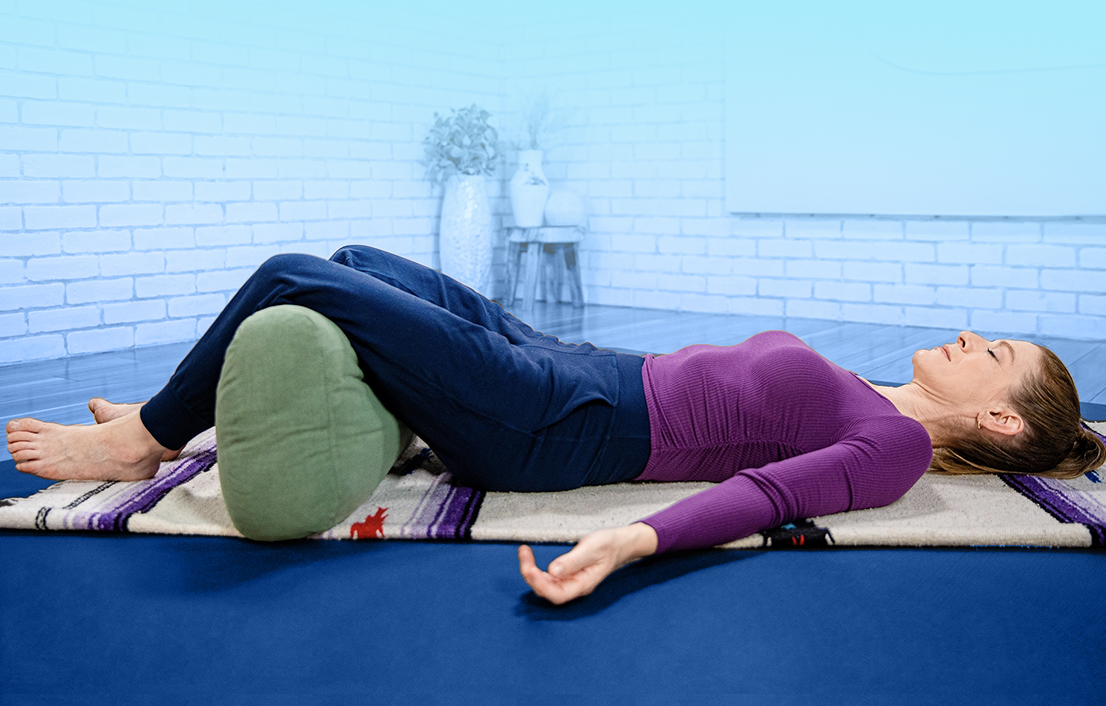
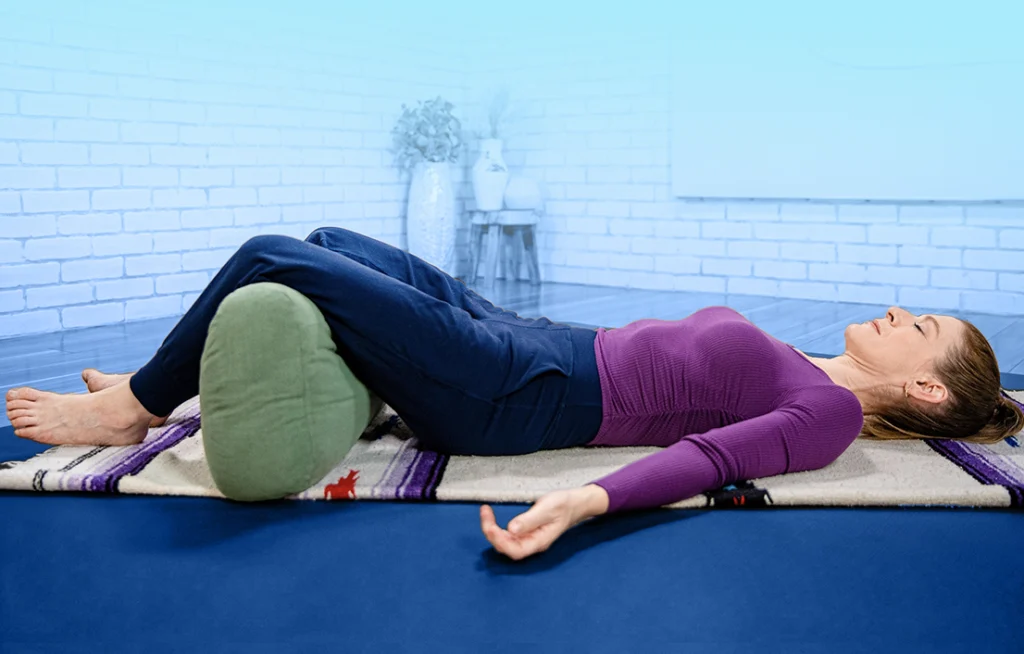
As outlined in Jill’s book, Body by Breath, a soft surface underneath your back is ideal. Having the knees slightly bent over a bolster or a couple of pillows and a really thin pillow beneath your head can also aid in creating a comfortable position. Your core body temperature changes considerably when you’re resting for a long period of time. Layering blankets on top of you or wearing socks can also support you in settling into a comfortable position for conscious relaxation.
Jill remembers her early drama school days where professors would guide students through journeys while in corpse pose. While positioned on their backs with their eyes closed, they were led through breathing exercises and taken on visualization journeys. This type of yoga nidra goes not only into imagination, but sanctifies an internally safe place. In this way, yoga nidra is a powerful practice that can access and reprogram the subconscious mind. Olympian Michael Phelps also touted yoga nidra as a way to help him visualize obstacles in the water prior to a race and train himself to stay calm no matter what the challenge.
A yoga nidra meditation can be adapted to suit various needs and preferences; however, the best times to practice are either midday for stress relief or prior to bedtime for improved sleep quality.
The goal of a yoga nidra meditation is to promote a profound state of relaxation. Yoga nidra offers a wide range of benefits, including stress reduction, improved sleep quality, enhanced emotional well-being, increased mindfulness and as a performance booster. By inducing deep relaxation, its cascading effects can lead to physical and mental rejuvenation and build emotional resiliency. Even a short daily yoga nidra meditation of even 5 minutes can lead to noticeable and profound results.
End Notes:
[1] Sharpe E, Tibbitts D, Wolfe B, Senders A, Bradley R. Qualitative Impressions of a Yoga Nidra Practice for Insomnia: An Exploratory Mixed-Methods Design. J Altern Complement Med. 2021 Oct;27(10):884-892. doi: 10.1089/acm.2021.0125. Epub 2021 Jul 15. PMID: 34265219; PMCID: PMC10772320.
[2] Sharpe E, Lacombe A, Butler MP, Hanes D, Bradley R. A Closer Look at Yoga Nidra: Sleep Lab Protocol. Int J Yoga Therap. 2021 Jan 1;31(1):Article_20. doi: 10.17761/2021-D-20-00004. PMID: 33175980; PMCID: PMC8932407.

Great overview of the elements of Yoga Nidra and ways to intentionally practice it. Also a reminder of all the places this process sneaks in during yoga, Tune Up, and other movement modalities. I really like the 5 Stages of Yoga Nidra- which I am thinking of as the “dramaturgy” of the experience. I will practice tonight as I head to bed!
Thank you for explaining what yoga nidra is, its background, and giving a clear, concise, step-by-step guide to practice it.
This article offers so much to reflect on and practice, great. I like the start with saying that Yoga Nidra is increasing in popularity and is good for stress reduction, improved sleep and overall well being who could ask for anything more. I loved the four video segments within the article. I also benefited from knowing that this might help with my PTSD and get me out of my constant fight or flight environment. I also like the options of Yoga Nidra, or sleep meditation or even an evening practice of yoga to help with sleep. Finally I was very surprised regarding Jill Millers statistic of 53% have relaxation induced anxiety. I went to a Yin hot Yoga recently with my niece and she said the hardest was corpse pose as she has trouble relaxing and staying still. I never realized before that relaxation is very hard for so many people. Thank you.
I absolutely love Yoga Nidra!!!! I love how express that a simple 5 minute practice can create a positive effect in stress and sleep. I’ve only done it at 15+ minutes thinking that was the only way to achieve the results. 5 min is a perfect mid day pick me up!
I appreciate that you included the roots of yoga nidra and its non-yogic modern applications as well. This practice is so transformative, thank you for sharing.
Years ago, I took a Yoga Nidra class and loved it so much that I took a teacher training. Since then I have taught teenagers how to use this tool as a way of relaxing during stressful periods. As mentioned in this article, Yoga Nidra may not be for everyone which I discovered. I wish I’d know about alternative tools such as the Coregeous Ball to down regulate the nervous systems. I feel my stressed-out students would have benefited if they were hesitant about Yoga Nidra.
I have been a huge fan of Yoga Nidra since I was first introduced to the practice in my 200YTT. At the time, I was working nights in the ICU. I would use the practice to help me on days when I had less sleep time available and also to help me fall asleep as part of sleep hygiene.
Incorporating the Roll Model modalities would be incredibly beneficial. I will definitely need to explore that with clients and in my own practice.
I must admit that I was one of them thinking that Yoga Nidra was for a deep sleep purpose until I started taking Jill’s classes. I’ve been practicing having lucid dreams to communicate with my subconscious mind, and I’ve learned that Alfa waves help Gamma waves which is the primal brain wave when lucid dreaming. So I am now hoping by practicing Yoga Nidra which might help me with having more Lucid dreams. We’ll see!
This is a great summary and reminder of how important this practice is and how beneficial it is to performance and mental strength. Typically people who are looking to improve these areas want to do more, practice more, try harder. And they overlook the power of NSDR and Yoga Nidra. In my yoga therapy training, we use the phrase “healing begins in rest,” but I think we could also say that “growth begins in rest.”
I have always offered a bolster under the knees or a rolled up blanket behind the head in my yin classes. It is great to know why these supports are appreciated by different bodies. I also love incorporating some of these nidra techniques to my opening or closing in hatha or yin.
interesting to use Yoga Nidra to condense recovery after intense exercise!
I will try that. Thank you:
Thank you for this comprehensive overview of techniques to regulate the nervous system! It’s nice to see such a variety of approaches: a reminder that there is something for everyone to tip their toe in and relax!