
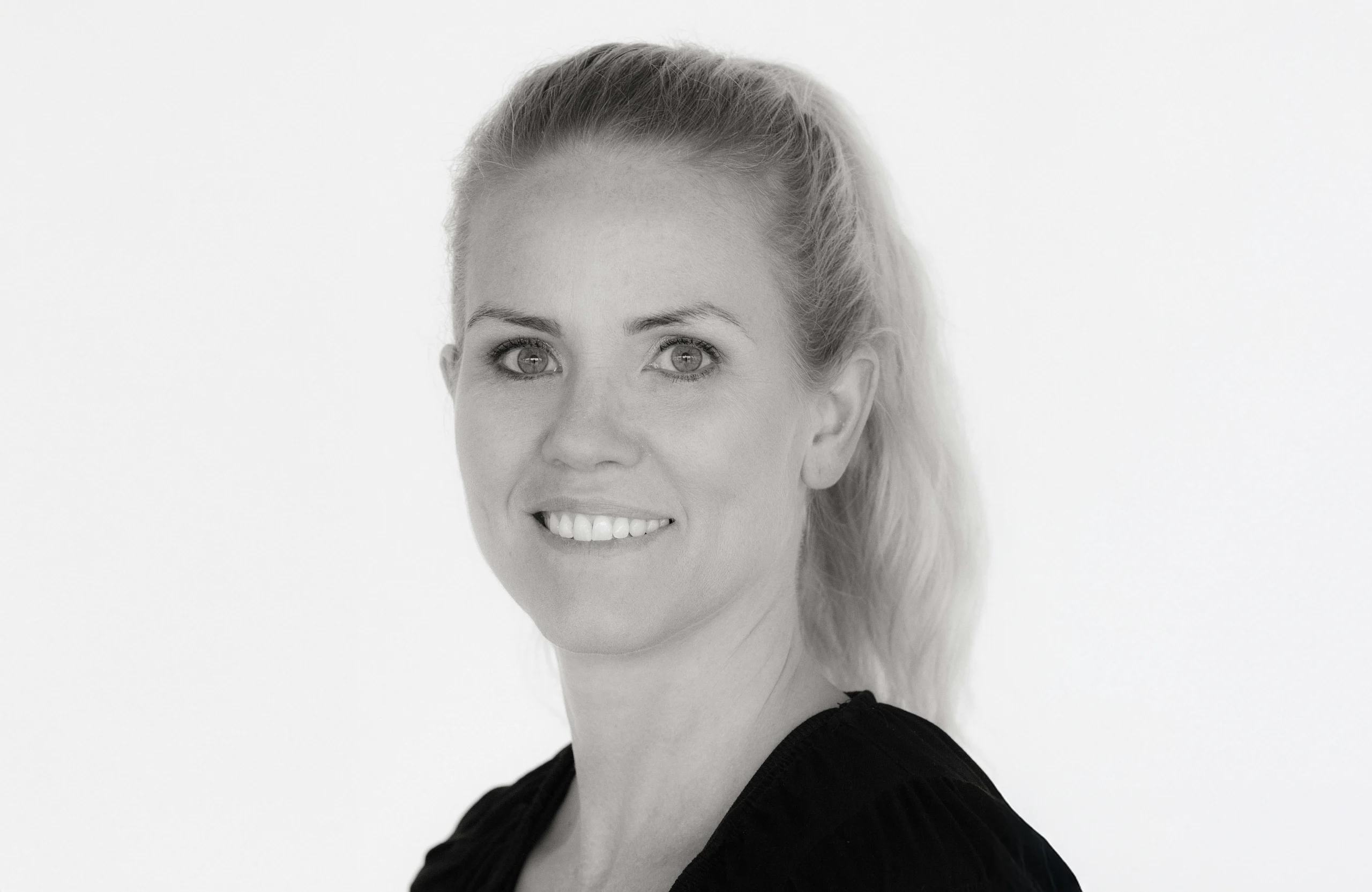
A dedicated lifelong learner, Sigrún has transitioned from intense, high-energy workouts to a gentler approach that emphasizes vagus nerve regulation through breath and mindful awareness of the body.
Sigrún encourages her students to attune to their nervous systems and explore the nuances of their subtle bodies, teaching them that by slowing down and downregulating their systems, they can enhance their overall well-being. She is passionate about sharing her knowledge to empower her students in taking ownership of their bodies. She believes that as we explore deeper, our bodies naturally strive to align with this harmonious frequency.
About the author: Interview led by Erin Wen, Tune Up Fitness content writer. Erin works as a Osteopathic Manipulative Therapist (OMT) and movement specialist for over 15 years. She has a background in classical ballet that eventually led her to become a yoga instructor. She is also a certified Yoga Tune Up® instructor and currently offers multiple treatment modalities including osteopathic manipulation, pelvic floor and pregnancy support, and movement trainings and workshops.
From Pain to Purpose: Sigrún’s Journey into Teaching
Erin: What inspired you to start teaching?
Sigrún: I played sports from a young age and have always been active (running, lifting weights) but I started developing problems with my neck in my early 20’s. It got so bad to the point that my neck would get stuck, and for days I could not move. I later found out that I had multiple tears along the ligaments of my neck which would make my shoulder muscles spasm. I never thought I would try a yoga class but in desperation to find a solution to my pain, I started to do hot yoga. I came upon Absolute Hot Yoga, which focuses more on strength building and I particularly enjoyed its focus on anatomy and alignment. From there, I started to teach yoga and received my personal training certification.
Around that time, I went to San Diego State and took a yoga class where the teacher pulled out the Roll Model® therapy balls to roll out our feet and our shoulders. I had never felt something like that in my body, it was amazing! I went home and immediately googled the balls and that’s how I found Tune Up Fitness. I have been teaching self myofascial release for almost 15 years now.
Erin: How was Happy Hips born? What’s the intention behind it?
Sigrún: My husband and I used to have our own small gym. I started teaching there and kind of made up my own combination of flow yoga with weight training. I always thought it was really strange how so many students had challenges sitting cross legged or in positions like pigeon. Everybody had tight hips! I started to use the Tune Up Fitness massage balls on my clients mainly focusing on the hips and that’s where the name came about. I started to receive really good feedback from my students.
I was also one of the first people In Iceland who introduced the benefits of using myofascial release balls in group class settings. Other teachers had been using rollers but no one was using massage balls. After I took the Roll Model® Method certification, I just thought a whole new world opened up for me and I was eager to share. I started to learn about fascia!
How Fascia and Vagus Nerve Regulation Changed Everything
Erin: How has understanding and learning more about fascia impacted your teaching and your own life?
Sigrún: Well, with teaching it really changed everything, both in yoga and personal training. First, there was a deeper understanding that the body as a whole is connected. At the beginning my focus and attention went to understanding the interconnectedness of the musculoskeletal system and realizing that if you have something in your shoulder, it could be coming from your hip. Now, when I am helping people to achieve more mobility or strength, I always use the therapy balls to teach students about the fascia.
Personally, when I started using the therapy balls, I stopped seizing up. I had been practicing yoga, getting massages, going to the chiropractor and everything would help, but only for a short time. Doctors were just giving me muscle relaxers and pain killers. After I started using the therapy balls, the improved mobility in my neck was incredible. At the beginning I would only roll the areas affected, my neck and shoulders. But as my depth in fascia evolved, I started to explore further territory like my glutes and sacrum and noticed how that would help my neck also! It was such a revelation. Even when I rolled my feet, it would help my neck! I started to notice that when you roll, very often you feel it in the area where your body is the most compromised.
Erin: What is your number 1 tip for teachers?
Sigrún: Listen to your body, notice how much more you feel when you start doing this work. The biggest take away most people get from coming to my trainings and classes is how much more they get connected and how much more they can feel in their bodies. Feel your body while you’re rolling to take ownership of your body.
Erin: How has Tune Up Fitness impacted your teaching?
Sigrún: I don’t think there are words to describe it! But I think I’ve learned that less can often be a lot more. I used to be very active, and was in the mindset that if what I was doing did not hurt, then I could not feel it and was doing nothing. I am totally the opposite now! Now I give myself the time to do things slowly, breathe, give pauses, and feel. Tune Up Fitness taught me the importance of emphasizing how important listening to your body is. Learning to listen to your body is essential, whether it is to improve movement, feel better, or how to connect with others.
Learning to listen to your body is essential, whether it is to improve movement, feel better, or how to connect with others.
Understanding the Vagus Nerve: A Key to Nervous System Health
Erin: You seem to emphasize the importance of working with the vagus nerve. What can you share with us?
Sigrún: The “a-ha” moment for me was learning that the vagus nerve is the connection to our viscera, to all of our organs. The vagus nerve is the nerve that slows us down, the one that helps us maintain homeostasis. Because of the nature of our society, our nervous system is not equipped to tolerate the speed and all the noise in the world today. Our bodies have the innate ability to heal itself but over stimulation impairs the function of our nervous system. I believe that in order to strengthen the function of the vagus nerve, we need to slow down.
Erin: How can we nourish the vagus nerve?
Sigrún: Exercise and breathing — A positive and safe touch helps strengthen the vagus nerve.
For example, using the Coregeous® ball with gentle pressure to provide a ‘safe strain” while breathing.
Polyvagal Theory and Body-to-Brain Healing
Erin: What is Polyvagal Theory?
Sigrún: The Polyvagal Theory was developed by Dr. Stephen Porges. He talks about the vagus nerve in connection with the social engagement system; emphasizing that how we perceive others and how we present ourselves impacts our nervous system. He talks about the ventral vagal system which is associated with feeling safe for emotional regulation. When we get stuck in a fight or flight response, we are stuck in a stress response.
When we experience trauma, the conductivity of the vagus nerve can weaken which can cause somebody to be stuck in a fight or flight response for many years. This response can get triggered if somebody yells at you and as a consequence, the nervous system shuts down.
When I work with clients, I explain to them that it is not their fault, but it is the nervous system’s response. One of the ways to address this is through talking therapy, which is a top-down approach, but only 20% of the vagus is from the brain to the body.
We also need to work from bottom up, because the messages to the vagus nerve are 80% body to brain.
Erin: How do you navigate clients that you might sense their nervous system is on high alert?
Sigrún: I work a lot with runners that tend to prioritize another run versus adding a recovery day and often, they complain that their pains don’t improve. I suggest prioritizing a recovery day to do gentle yoga, roll, swim, or walk where your body has the time to downregulate. I teach most people techniques with the Coregeous® ball such as a gentle diaphragm or abdominal release. Many people have a challenging time being still and simply breathing, but if you add an exercise with one of the therapy balls, it feels like they have a task and then the breathing comes naturally. I think the Coregeous® ball is a really good tool to help people downregulate a heightened nervous system.
Erin: I noticed you have completed many trainings, what keeps you inspired and wanting to learn more?
Sigrún: I feel that the more I learn, the more I start to connect the dots. With everything I have learned about the vagus nerve and the nervous system, I realize that if those systems are healthy in me, then the more curious I am and the more I want to learn more.
I love when people feel good after they take my classes or come for a session. It’s amazing that you can help people feel good. I have learned so much and can see how it can all feel complex and overwhelming. I try to make it simple and approachable to my students and clients so that they can understand it. How you act and how you hold yourself affects everything around you.
The Bowen Method and Fascia-Informed Movement
Erin: One of the last trainings you did was about the Bowen Method, can you share with us what it is and how it compliments your work?
Sigrún: During Covid, I went through a lot of online trainings and took all kinds of classes. My teaching went through a shift, I focused more on educating my students about their nervous system, the lymphatic system, practices that nourish the body as a whole and not just about the muscles. Many people would complain about muscular pain but by using different techniques, I encouraged my students to pay attention to the subtle systems in the body that might have been contributing to the pain. I believe that working on those systems is the foundation to heal the musculoskeletal system.
The Bowen Method is not a massage but a movement of the superficial fascia over deep fascia. It’s a specific kind of movement where you perform a stretch over the superficial fascia and slowly go deeper, it is similar to a shearing motion. With the Bowen Method, I work around the area of pain to facilitate more blood flow and activate the nerve endings. I am guiding the body, it is very similar to what we are doing with the therapy balls. I often teach my clients to do some of the movements on their own. You can always tell people how you felt, but you cannot tell people what to feel. I can share with people that you might feel like this or that, maybe even feel nothing at all, and there’s nothing wrong with that! You will receive the answers as you listen.
Erin: How do you address pain?
Sigrún: I think with pain it is about understanding what you’re feeling. Sometimes you get stuck with an idea of what or where the pain is, you receive a misinterpretation of that feeling. But if you listen to your body you might have a clearer understanding of the root. I suggest people write down what they do during the day because they might figure out what movement triggers the pain. Understanding the pain is important.
I think with pain it is about understanding what you’re feeling.
Empowering Students Through Nervous System Education
Erin: What are your top self-care tips?
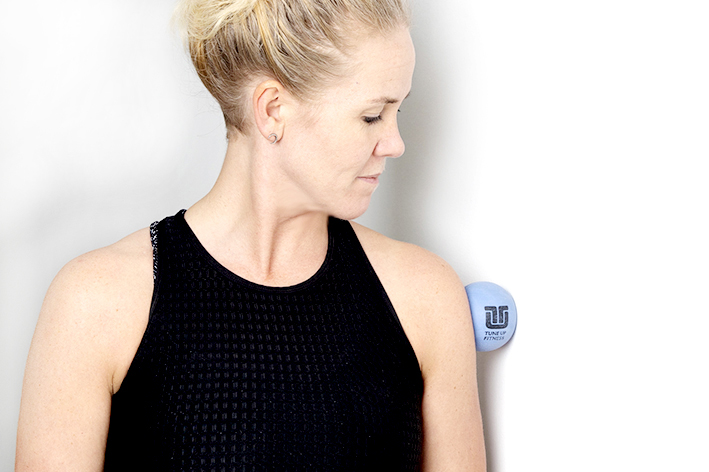
Sigrún: Breathing intentionally. Take time for yourself, give yourself the time for you. If you don’t have the time, start small and eventually that will lead to more. When you start to do myofascial work, a curiosity from within arises. I recommend that people take their therapy balls to work, find a wall, roll for 2-3 minutes twice a day. Your body will naturally start to ask for more. When you are thirsty, your instinct is to grab a glass of water. For me, when I feel something in my body, I have a ball and without thinking about it, I am against a wall or on the floor rolling. I know that rolling is going to help.
When you start listening to your body, you start to learn what it is asking for and what it needs. As you learn more about rolling, you also start to understand what kind of rollout you need, or what kind of ball to use depending on the intention. We want all the systems in our body to be in homeostasis.
Erin: What is your goal as a teacher?
Sigrún: One thing that I am happy and proud of, is that after starting Happy Hips and using the therapy balls, it gave me control and ownership of my own body. I could do things for myself without having to rely on something external. I want to give people that knowledge, to share these tools to people so that they can feel good and take care of themselves.
Find Sigrún on the Web
Website: https://happyhips.is/
Instagram: @Happyhips.is

There are so many great nuggets of wisdom in here, it would take more time to copy & paste them here than to simply (re)read the interview. 😉 One of my favorites is the observation that when we feel thirsty, we reach for a glass of water. Similarly (one hopes), the more we ball roll, the more our body will tell us to ball roll when we feel like something is up.
And while the mention of the vagus nerve in the title pulled me in, the variety of tools Sigrun uses, and her own inspiring story, push me to keep exploring.
There are SO many threads & colors in the tapestry that is the human body & the human experience…
There are so many concepts of your article that I love. “less can be a lot more:, Do things slowly, breathe pause feel, and learning to listen to your body all great advice. I must admit study of the vagus nerve is a definite interest to me due to my PTSD and often feeling stuck in fight or flight mode. Anything that can change that is welcomed Great example to use the Coregeous ball during breathing. Also I will likely do more research on Dr Stephen Porges as well as well as the Bowen Method. Thank you for sharing your article and its wealth of information.
Never heard of the Bowen method. will check it out. Interesting.
Will also check out Happy Hips (really need it)!
“How you act and hold yourself affects everything around you.” This sentence resonated with me because our nervous system is affecting other’s nervous system all the time whether we are aware of it or not. That’s why we need to slow down in order to strengthen our vagus nerve just like she said. And I am so grateful that we have such perfect tools for that. The Coregeous Ball and Yoga Tune Up Therapy Balls!!